World Book Day: Kate Henshall highlights the maths hidden in plain sight

A World Book Day reflection – through two lenses.

I first heard this line from the much-loved book Brown Bear, Brown Bear, What Do You See? (written by Bill Martin Jr. and illustrated by Eric Carle) during a baby sensory class when my daughter was only a few months old and I’ve got to admit – I was hooked straight away.

The simplicity. The illustrations. The repetition.

Needless to say, my daughter loved it too and she still does at age two.

She knows what’s coming next. She anticipates the rhythm. She turns the page before I’ve finished the sentence. And if I pause, she can fill in the gap with complete confidence.

But recently, I noticed something else happening.


Lens 1: My perspective as a mum

After reading the book (for the thousandth time!), my daughter began noticing…noticing colours everywhere:

“White car.” “Blue cup.” “Banana, yellow.”

Then one day she started to match some of her toys by colour, not always accurately (yet), but I could see her early thinking emerging.

Not because I asked her to. Not because it was planned.

Just because she had started to notice. And that’s when it really struck me:

Early maths doesn’t start with counting. It starts with noticing.

Why this matters more than we think

Noticing is about recognising and understanding:

  • what is the same
  • what is different
  • patterns
  • colours
  • attributes

This is where early mathematical thinking begins.

When children notice that objects share the same colour, they are beginning to match. Later, they learn to sort groups of objects by that shared attribute. These small moments are quietly building important foundations for later maths.

What I’m trying at home

Since noticing this, I’ve been leaning into these moments a little more, not turning them into “activities”, just noticing alongside her.

A few things I’m trying at home:

Pausing before the page turns

Sometimes I stop and see if she fills in the animal or colour.

Noticing colours in real life

“That cup is red, like the bird.”

Matching in everyday moments

When sorting washing, I might hold up two socks and say, “These are the same colour… I wonder if we can find more socks that match?”

• Read it again (and again)

Repetition really does matter. It’s lovely to see her engaging in reading before she can read words, filling in the gaps and muttering in her own way to the pattern of the words.

None of this feels like teaching. It just feels like being present.


Lens 2: The Rethink Maths Lens

At Rethink Maths , we are particularly interested in foundations and what happens before formal number work begins. Because early mathematics does not start with counting. It can start with noticing.

Brown Bear, Brown Bear systematically draws children’s attention to key mathematical structures…

Children are invited to notice:

  • attributes (particularly colour)
  • repetition and pattern
  • sameness and difference
  • predictability

The repeating structure:

  • colour + animal
  • colour + animal
  • colour + animal

can support the development of pattern awareness, attributes and comparison, some of the critical precursor skills and concepts to later, more complex mathematical concepts and reasoning.

Texts such as Brown Bear are particularly powerful because they have a clear, simple focus on understanding attributes such as colour. Attributes enable us to reason and explain why we have sorted and classified objects in the world around us. If children have limited opportunities to explore and communicate about attributes of an object or an experience then their ability to compare, sort and classify could be limited.

Why this matters for early maths provision?

Before children can engage more formally with number, they need well-developed foundations in:

  • attributes
  • comparison
  • pattern
  • change

These underpin later success in more formal, complex mathematical skills and concepts. However, these foundations are not always recognised as critical to future success or seen as ‘maths’.

Educators and pre-school settings may wish to consider:

  • Where do our story choices support mathematical structure?
  • How intentionally do we draw attention to precursor maths concepts like attributes?
  • Do our classroom routines support both matching and sorting?
  • Are we valuing early noticing as mathematical thinking?

Small, intentional shifts in adult interaction can significantly strengthen the mathematical potential of familiar texts.

World Book Day rightly celebrates reading for pleasure. Alongside this, it offers a moment to recognise that many high-quality books also provide rich mathematical learning opportunities.

At Rethink Maths, our Foundations mission is clear: Before formal maths. Before number facts. Before worksheets. Children need strong foundations in noticing, comparing and classifying.

Sometimes, those foundations begin with a simple, well-loved story. Explore our Foundations mission here and how we want to work with settings to develop a secure deep understanding of early maths through our fully funded early maths trials.

So this World Book Day, I’m reminding myself (as a mum and as an educator):

  • When we read, we are building language.
  • When children notice attributes, such as colours, they are building early maths.
  • When they predict what comes next, they are learning patterns.

Sometimes the most powerful maths is hiding in plain sight — inside well-loved storybooks.

We’d love to hear from you:

Which texts in your setting or home are on repeat this World Book Day? And can you see the maths hiding in plain sight?

#EarlyYears #MathsFoundations #WorldBookDay


References

Erikson,(n.d.) Early Math Collaborative, https://earlymath.erikson.edu/why-early-math-everyday-math/precursor-concepts/

Hynes-Berry, M., Chen, J., & Abel, B. (2021). Precursor Math concepts: The Wonder of Mathematical Worlds with Infants and Toddlers.
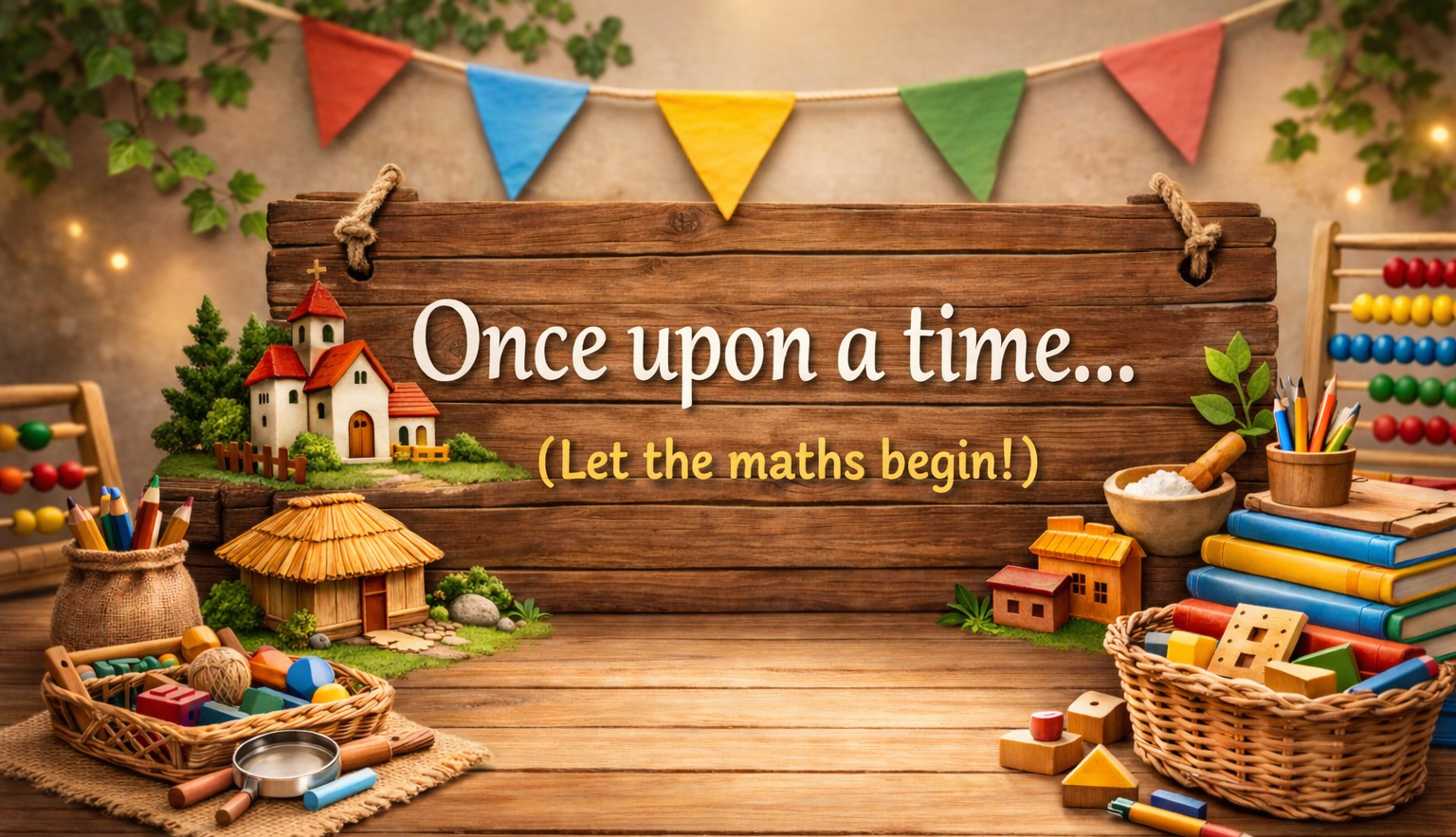
Once upon a time… Building mathematical foundations through fairy tales

Fairy tales have been told for generations. They are familiar, comforting, a little bit magical, and they are also a brilliant vehicle for early mathematics.

On Tell a Fairy Tale Day, it is the perfect moment to pause and reflect on how stories can help children build strong mathematical foundations in ways that feel playful, meaningful and deeply engaging.

In the early years, mathematics is about making sense of the world. It is about noticing patterns, comparing quantities, exploring space, talking about what we see and using language to describe relationships. Fairy tales offer a rich shared context where all of this can happen naturally.

Strong foundations start with meaning

Young children learn best when ideas are rooted in experiences they understand. Fairy tales give us ready made contexts that children can step into through role play, small world, construction and storytelling.

When mathematics is woven into these narratives, it stops being abstract. It becomes purposeful.

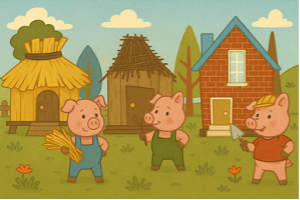
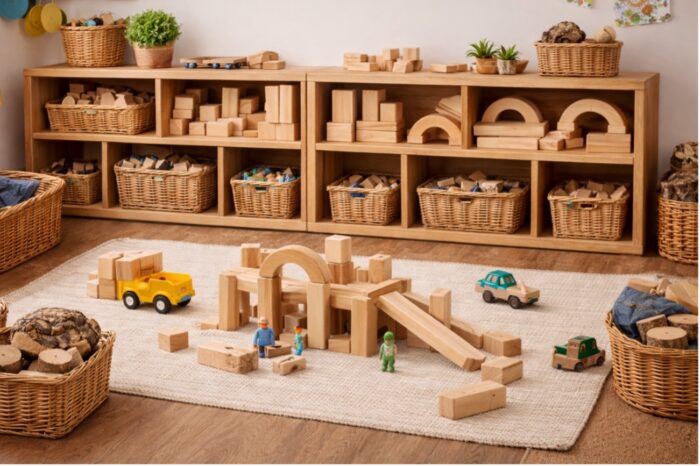
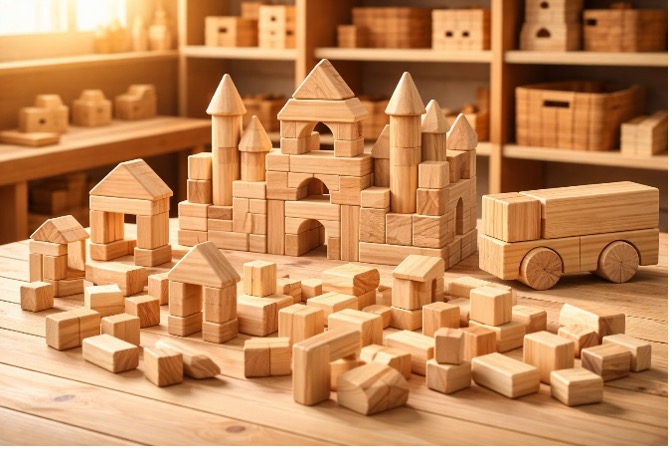
For example, we might build the houses from The Three Little Pigs, choosing blocks we can stack, rotating them to make enclosures and positioning them carefully to create a roof.

This is how foundations are built, through repeated, meaningful encounters with number, measure, shape and spatial thinking, all grounded in play.

Let us look at some of the mathematics that fairy tales make possible.

Counting, comparing and subitising through familiar stories

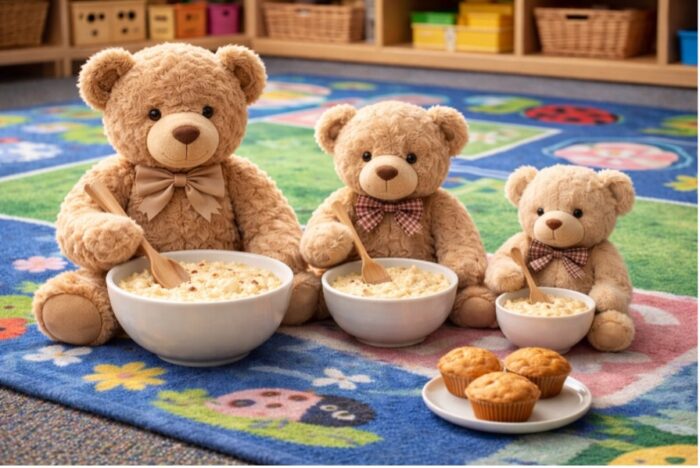
Recreating the Three Bears’ house and their breakfast from Goldilocks and the Three Bears opens up rich mathematical thinking. Children might give each bear a bowl, a spoon and a cup, developing their one-to-one correspondence and together we can notice:

  • Do we have enough?
  • Do we have more bowls or more bears?
  • Are there fewer cups than bears?
  • What do we need to add so everyone gets one?

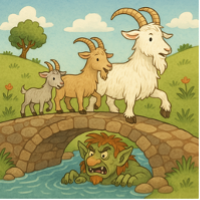
Stories like The Three Billy Goats Gruff or The Three Little Pigs are perfect for developing early subitising. As you read, pause and ask:

  • How many goats can you see?
  • How many pigs are there?

Children begin to recognise quantities of 1, 2 and 3 without counting each time. Over repeated readings, this builds confidence and fluency with small numbers.

Exploring measure, size and comparison

Fairy tales are full of contrast, which makes them ideal for exploring measure.

In Goldilocks and the Three Bears, we naturally talk about big and small, full and empty. Children can pour, compare, fill and empty bowls or containers, linking language directly to experience.

Jack and the Beanstalk brings height and length to life. Children might grow their own beanstalks and notice how they become taller and taller. This is not just about measuring. It is about noticing change over time.

We can explore height, build a beanstalk using cardboard boxes, tubes, or blocks. Create a vertical height track that children can climb with a character, counting steps or noticing how the structure grows.

You could even explore this outdoors by placing a character inside a clear tube and filling it with water so Jack rises higher and higher. Children see that the more water we pour, the higher the level rises. They experience comparison, volume and cause and effect in a tangible way.
Similarly, recreating The Magic Porridge Pot invites exploration of capacity.

  • Which bowl shall we choose?
  • How much porridge should we pour?
  • Do we need more milk?
  • How do we know when it is full?

One more

The Gingerbread Man is a wonderful story for exploring one more. As each character joins the chase, children can build towers of cubes or place counters to represent who is running after him.

Placing these on a five frame or ten frame helps children see both the total number and the pattern of one more. They begin to notice that each time the group grows by one and the next number is said.

Positional language such as first, next and last also comes alive here, as it does in The Enormous Turnip, where characters join one by one. Children can physically line up figures, add one more each time and describe what changes.

Shape, space and construction through story worlds

Construction play inspired by fairy tales opens up rich spatial thinking.

Recreating the houses from The Three Little Pigs invites children to think about:

  • How blocks stack
  • Which shapes they want to use
  • How to make walls and enclosures
  • How to create a roof
  • Why some structures are stronger than others
  • How many blocks they need

Children also need to plan. How many pigs do we need? Do we have enough? This blends number, shape and problem solving seamlessly.
These constructions might move outdoors too.

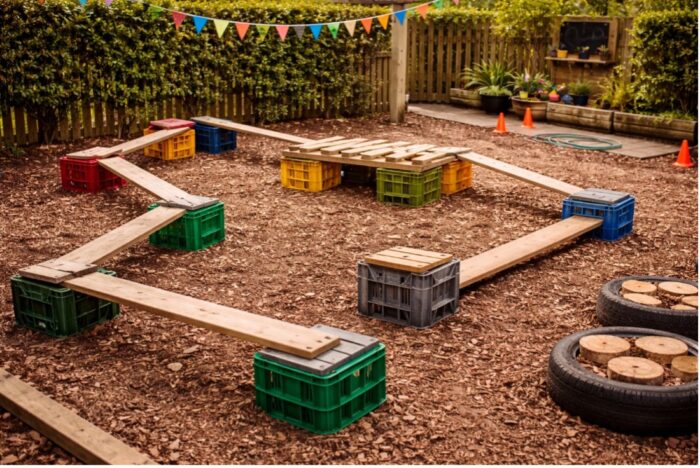
Building the bridge in The Three Billy Goats Gruff encourages children to experiment with rotating bricks, creating stable arches and thinking about how the goats can go over while the troll stays under. Here, positional language such as under, over, on top, next to and between becomes purposeful.

Stories like The Princess and the Pea can spark exploration of the properties of shape.

  • Can long blocks balance on curved shapes?
  • Why do some shapes roll while others stack?

Maps, movement and positional language

Fairy tales are full of journeys.

In Little Red Riding Hood, children can make maps of the forest using blocks, small world or drawings. They might give directions to reach Grandma’s house while avoiding the woods. Language such as next to, behind, through, around and between becomes meaningful when tied to a goal.

An obstacle course inspired by Hansel and Gretel turns spatial language into full body learning. Children are not just hearing the words. They are living them.

Following children’s lead

These examples are just starting points. The real power of fairy tales in early mathematics lies in what happens next.

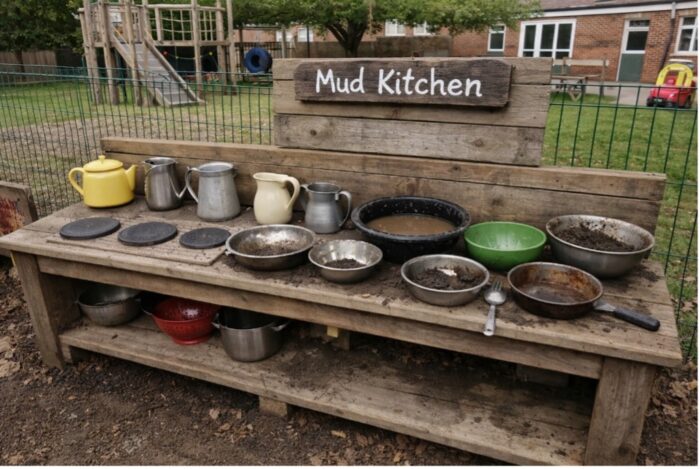
Children may be inspired to reenact parts of the story, setting up the Three Bears’ kitchen in the home corner, rebuilding the Little Pigs’ houses in the construction area, mixing potions in the mud kitchen to wake Sleeping Beauty or extending the beanstalk higher than ever imagined.

This is where we can maximise mathematical opportunities.

When children step into the story world themselves, mathematics becomes embedded in their decisions:

  • How many bowls do we need?
  • Is this tower tall enough?
  • Do we have more wolves or more pigs?
  • How can we make it stronger?
  • What happens if we add one more?

We can notice the mathematics already happening in play, and where appropriate introduce precise language and gently extend thinking through thoughtful questions.

Fairy tales nurture creativity, language and emotional development. They also offer endless opportunities to explore mathematics in ways that are joyful, meaningful and memorable.

Once upon a time might just be where strong mathematical foundations are inspired, strengthened and brought to life through stories.

Kate Henshall reflects on screen time, Paddington and why the small moments matter

Life without Paddington Bear wouldn’t be the same in our house right now. My two-year-old is completely obsessed…we even had a Paddington-themed birthday party. She loves watching The Adventures of Paddington. And yes, sometimes that bit of screen time is exactly what we both need at the end of a long day.

But like many parents (and educators), I find myself asking: Is this helping her development or hindering it?

The recent findings from the Children of the 2020s: home learning environment and screen time at age 2, study really made me reflect…as a parent and as an educator.

It highlights how much screen time young children are experiencing but it also reinforces something deeply important…

What matters most for young children’s development isn’t expensive resources or digital programmes…It’s human interaction.

  • Talking
  • Singing
  • Playing
  • Looking at books together
  • Exploring numbers

The research does show that higher screen time is linked with lower expressive vocabulary. But it also reminds us that it’s not simply about removing screens. It’s about protecting and prioritising interaction.

And interaction is where foundations are built. These foundations are built in small, repeated, everyday moments.

In our house, when Paddington is on, I try to watch with her. We laugh together. We repeat phrases. We notice things together. One episode even led to us writing and posting a letter. The screen was the starting point, but the learning happened in the moments after… talking, pretending and playing.

Big impact doesn’t come from big interventions. It comes from those small moments, repeated often. For me as a parent, those moments can also include:

  • Talking while you walk
  • Counting while you tidy
  • Singing while you wait
  • Noticing together

Supporting early learning isn’t about doing more. It’s about strengthening what we’re already building with intention.

James Lansdale-Clegg reflects on bought-in curricula, teacher adaptation and professional development

I was reading a great post [on LinkedIn] by Nathan Burns earlier about the use of bought-in curricula and the challenges around them. I found myself nodding along to the post and the replies while drinking my morning brew (Yorkshire Tea, of course) and it got me thinking.

As someone who creates maths resources and schemes of learning, I think the use of bought-in curricula and how to support teachers in implementing them is such an important area to explore. Over the years I’ve spent working in this field, I’ve often found myself thinking how strange it feels to say, on one hand, “I’ve created this, I think it’s pretty good and you should use it.” while also saying, “But you will need to put in effort into changing bits of it to make it really work well.” I wonder how many other jobs feel like that.

And that’s when I got thinking about my cup of tea and the similarities with creating lessons. The memory of trying to do a tea order for the whole family over Christmas came rushing back. The same thoughts and feelings I get when I’m trying to plan a lesson that is going to work for all the students in front of me.

Years of building knowledge and experience goes into knowing how to make an effective version of each element – whether that is a PowerPoint, a worksheet, an activity, a tea bag, the milk. Without having those starting points it would make the process of making a brew/creating a lesson a far more complex job. And of course it also saves time – something we know as teachers there is never enough of. Imagine how long it would take to make my brew if I had to start with the cow and some leaves from a Camellia Sinensis (yes, I had to google what plant tea comes from).

But then I need to know what to do with those elements to make the cup of tea (or is it a lesson?) and that’s where professional development comes in. From a complete novice who has never made a cup of tea or designed a lesson to those who have been making them for years. Even knowing what to do with the different elements, in what order etc. can require support (I do actually have a friend who when he tried making his first brew put the tea bag in the kettle!)

And that’s before we even consider the fact that everyone’s perfect cup of tea is slightly different.

  • How hot should it be? Where do I need to pitch this lesson?
  • How long do you leave it to brew for? How long should I spend on my explanation and modelling?
  • How much milk do I add? (And when!) How much fluency practice do they need?
  • Do I need to add sugar or a sweetener? Do I need a nice, open-ended problem-solving task at a certain point to really deepen understanding?
  • What brand of tea bag should I use? Actually, the answer to this one is obvious!

And that is all before we even consider individual needs. What if you have an intolerance to dairy like my wife does? I need to adapt even further and use different ingredients. This might be using a different manipulative to the one that is used in the resource. Perhaps the resource uses place value counters when really Base 10 would better support learners in my class, helping them see the proportional sizes of the units. Rather than clicking through a PowerPoint that models a concept with place value counters, I may be better off following the same structure and highlighting the same key points but live modelling with Base 10 instead.

This is probably easiest if we zoom in on just one part of a lesson: a worksheet. As a designer, when I am creating a worksheet for example, I am thinking about both the students and the teachers. I need to ensure that the questions in my worksheet are appropriate to the learning objective. I need to ensure that there is a range of fluency, reasoning and problem-solving questions. I need to ensure that there is a range of complexities in the questions to provide support and challenge. I also need to try to make the questions engaging and interesting.

For the teachers, I am also thinking about trying to support their subject knowledge. Have I included examples of different methods that could be used so that teachers have a range they can choose from. Have I used a range of representations? For example, not all classrooms have access to a rekenrek so I need to ensure I have used other representations. Have I used questions that address common misconceptions? And those are just a few examples – there is a lot to think about in the design process.

But then when it comes to teaching using that resource even more questions appear. Even though I have created hundreds of widely used worksheets, I would never go into a class and use them exactly as they are. That is not because I don’t think they are good, but I know every student and every class is different. So what questions do I ask myself to help me adapt when I am teaching?

  • Which questions are essential for where my students are at and to achieve the objective of the lesson?
  • What is the best order and best time in the lesson to get students to answer the questions I have chosen to use?
  • Are there too many models/methods used? Will they confuse my students? Do I need to leave some out?
  • Are there enough basic fluency questions or do I need to add some more?
  • Does the worksheet use variation theory and in the way I would want or can I adjust the questions?
  • What follow up questions can I ask verbally to prompt deeper thinking or rich mathematical discussions?
  • Can I make one of the questions open ended so there are multiple solutions?
  • Do I want my students to do all the questions independently or would some work better as a paired/group task?
  • Do I need to add a visual support such as a bar model to help students who are struggling to access this question?
  • What manipulative might support a student with this question?

These are not easy questions to answer. And these are just some of the things we need to think about regarding just one aspect of the lesson, the worksheet. What about the rest? This is where CPD can be so powerful. Giving teachers the tools, subject knowledge and, most importantly, the confidence to be able to adapt because they know the needs of the students sitting in front of them better than any resource creator ever could.

To sum up, I think carefully crafted resources and schemes of learning are a great thing (a good job really given that is how I earn a living), but to make cups of tea or learning journeys that are perfect for all the individuals in front of us requires adaptation. But that’s not an easy thing to do and is where I think should be the real focus of CPD in schools. So, do bought-in curricula make the situation worse? No, but poor implementation and underinvestment in CPD might.

And I’ve not even thought about different types of tea – Peppermint, Rooibos etc. – not sure where they fit into this but I’m sure you get the picture!

Rethink Maths secures funding from The Richmond Project to trial new early years programmes

Rethink Maths has been awarded funding from The Richmond Project, a charity set up by Akshata Murty and Rishi Sunak, to trial two new early maths programmes in nurseries and schools across England.

The funding will support national trials of two linked, structured programmes designed to strengthen early number development, spanning pre-school to Year 2. Both programmes aim to transform how young children experience mathematics in their earliest years of education.

The trials will begin in September 2026, with settings across England invited to take part in shaping and refining the programmes before wider rollout.

Caroline Hamilton, CEO of Rethink Maths, said:

“This funding means the world to us. We’ve been working hard to build something we believe could genuinely make a difference to how young children experience maths – and now we have the chance to test it properly, with real settings, and see what impact it can have. We’re incredibly grateful to The Richmond Project for believing in what we’re trying to do.”

Kat Martin, Director of Foundations at Rethink Maths, added:

“The early years matter so much. The experiences children have with maths at a young age, shape how they feel about it for years to come. When those early experiences are rich, playful, and full of purpose, children build confidence, curiosity, and understanding that stays with them for life.”

Rethink Maths is now inviting nurseries and schools to register their interest in taking part in the trials. Participation in the initial efficacy trials will be fully funded, with settings receiving training, resources and ongoing support at no cost.

Find out more or register your interest now.

Reflections on the Curriculum and Assessment Review

I’ve taken a couple of days to reflect before sharing my thoughts on the recent Curriculum and Assessment Review. It’s an important piece of work with a lot to take in, and as someone deeply invested in maths education, several points really stood out to me.

“We must promote high aspirations and raise standards for the significant group of young people for whom the current system creates barriers. In this way, we can ensure the best life chances for all young people, irrespective of their background.”

This struck a real chord. Anyone who knows me knows how passionate I am about helping all students succeed, whatever their background or upbringing. We’ve seen great progress in education over recent years, but there are still far too many young people for whom the system simply doesn’t work.

Every statistic in that report represents a real student — a young person with real hopes, real dreams and real aspirations. It’s our job to give them the best possible chance of achieving those within a system that truly supports them. Any steps towards breaking down the barriers that exist are steps in the right direction.

“Develops a programme of work to provide evidence-led guidance on curriculum and pedagogical adaptation (as well as exemplification) for children and young people with SEND, including those in specialist provision, who experience various barriers to accessing the curriculum.”

It’s encouraging to see SEND considerations built in from the start rather than added later as an afterthought. That mindset, inclusion by design, not by adjustment, is what real equity looks like in practice.

“It is important that we recognise the significant progress made in Maths education in England over recent decades, and that our recommendations maintain and build on the many strengths detailed in this report.”

I was also pleased to see recognition of the progress we’ve already made. It’s easy to focus solely on the challenges, but there’s been a huge amount of improvement and innovation in maths teaching over the years. Acknowledging those strengths while being honest about what still needs to change strikes a healthy balance.

“Retains the amount and type of content in the Key Stage 1 to 3 curriculum, but re-sequences it so that topics are introduced in such a way that pupils can master them deeply, with opportunities for more complex problem-solving in each area, and reduce repetition in later years.”

This point really resonated with me. Early in my career, I remember teaching ratio to a Year 8 class without realising they’d already covered it in primary school. Some students remembered it and flew ahead; others didn’t and felt they were failing again. Repeating topics without building true understanding can widen the gap and damage confidence. Restructuring the curriculum so students learn in a more coherent sequence feels like a crucial step forward.

Of course, there are still many questions to be answered. But overall, this review feels like a positive move towards a system that serves every learner better.

For the teachers reading this: it’s worth remembering that these are still only recommendations. There’s no need to rush into changes until we see how things develop. For now, it’s a good opportunity to pause, reflect and think about what these ideas might mean for our classrooms in the future.

Progress takes time, but this feels like a thoughtful and hopeful direction for education in England.

Stepping into my new role

I’m really excited to be stepping into the role of Managing Director at Rethink Maths. This is so much more than a job for me. It’s about helping to change the way the world sees and learns maths.

Why maths matters to me

I grew up in a deprived background and I know first-hand how education can open doors. For me it was maths that changed everything. It gave me confidence, opportunities and the chance to break the mould.

That’s why it upsets me when people so easily say things like “I hated maths” or “I was rubbish at maths.” We’d never say that about reading or writing, yet it seems fine to say it about maths. I want to change that. I want every learner, whatever their background, to feel successful in maths and to see where it can take them.

Finding my path

When I was studying for my maths degree, I wasn’t sure what career I wanted. I thought about finance, banking, actuarial work and statistics. Then I did a volunteer placement at a school in Morecambe and that changed everything.

Watching students connect with maths and realising I could play a part in that journey made my mind up. From there I went down the Schools Direct route to become a secondary maths teacher and I haven’t looked back.

Learning along the way

I never planned to leave the classroom. But stepping out of it gave me the chance to widen my impact and shape more lives. For the past eight years I’ve worked at White Rose Education. Every role there has taught me something and I’ve been lucky to be surrounded by brilliant people.

Caroline and Tony in particular have been huge influences on me. I’ve learnt so much from both of them. To now have the chance to keep working with them at Rethink Maths is honestly an honour.

The challenges we face

Maths education has its challenges. Equity is one of the biggest. Students come with different starting points, different experiences and different opportunities, yet we judge them all by the same exam.

As a girl from a deprived background I know how much this matters. I want an education system that feels accessible to all but still pushes every learner to achieve their best. Girls and disadvantaged students are groups I feel especially passionate about supporting. I want them, and every learner, to believe they can do maths and that maths can be for them.

Why Rethink Maths?

What excites me most about Rethink Maths is that our mission speaks directly to these challenges. Together we want to:

  • Rethink Foundations – give every child the strongest possible start in maths with deep understanding, lasting confidence and joyful learning.
  • Rethink Confidence – help people believe they can do maths whatever their age or background because confidence opens doors and changes lives.
  • Rethink Inclusion – make sure every learner feels included and valued in maths, recognising their strengths and never lowering the bar.
  • Rethink Real-world – show how maths makes sense in everyday life. I want students to see maths as something useful and meaningful, not just abstract theory.
  • Rethink Teaching – support teachers every step of the way with resources and strategies that really deliver.

These aren’t just words. They’re the values that will guide everything we do.

Looking ahead

Teachers are already stretched and at Rethink Maths we’ll be thinking hard about how to help manage that workload so teachers can focus on the students in front of them. We want to inspire confidence in every classroom, so teachers feel supported to do what they do best and students are excited to explore the beauty and power of mathematics. For us, it’s about rethinking what’s possible in maths education and helping to shape a future where every learner can fulfil their potential.

I’ve been lucky to have some amazing roles in my career, but this one feels truly special. I get to help build something new with people I deeply respect. Together we share a vision to make a real difference. That’s why I’m here.

At Rethink Maths we want every learner to thrive. To build confidence, open doors and prove that maths really can be for everyone.